Why Pain and Stiffness Can Feel Worse in Winter
As winter settles in, many people notice that their bodies feel different.
Joints may feel stiffer, an old injury can become more noticeable, the lower back may ache more readily, or the neck and shoulders may tighten despite no obvious increase in activity.
Cold weather, reduced activity and changes in daily routine can all influence how comfortable and mobile we feel. Chinese medicine has also traditionally paid particular attention to the relationship between cold, movement and pain.
Cold, Movement and Pain in Chinese Medicine
A traditional Chinese medicine principle often associated with pain is that discomfort may arise where the smooth movement of Qi and Blood has become restricted.
Within this framework, cold is considered contracting in nature. It is therefore traditionally associated with stiffness and reduced movement, particularly in areas that are already vulnerable.
Common areas include:
- the lower back
- hips and knees
- neck and shoulders
- sites of previous injury
- joints that are already prone to stiffness or discomfort
This does not mean that winter pain is caused simply by “poor circulation”, nor does it replace a biomedical diagnosis. Rather, it is one way Chinese medicine describes patterns in which cold, stiffness and pain appear together.
Why Old Injuries May Become More Noticeable
People are sometimes surprised when an old injury becomes troublesome again after months or even years of relative quiet.
There can be several practical reasons for this. Colder weather may lead to less movement, more muscular guarding and changes in posture or activity. Existing joint or soft-tissue problems can therefore become more noticeable.
From a Chinese medicine perspective, previously vulnerable areas are also considered more susceptible to the effects traditionally associated with cold and constraint.
People may notice that discomfort:
- feels deeper or more fixed
- takes longer to ease
- is worse first thing in the morning
- feels aggravated by cold or damp weather
- improves after warmth or gentle movement
These patterns can provide useful information when deciding how treatment should be approached.
Common Winter Pain Patterns
During colder weather, people commonly come to clinic with combinations such as:
- stiff or aching lower back
- tight neck and shoulders
- sore knees or hips
- joint discomfort that feels better with warmth
- dull or heavy aching
- reduced mobility when first getting up
- old injuries becoming more noticeable
The cause of these symptoms varies considerably from person to person. Structural problems, arthritis, muscular tension, previous injury, activity levels and general health all need to be considered.
Chinese medical diagnosis adds another perspective by looking at the overall pattern rather than treating every painful area in isolation.
Movement Matters – But So Does How You Move
Keeping active through winter is usually useful, but forcing stiff or painful tissue is rarely helpful.
When the body feels cold and guarded, people can sometimes respond by stretching harder or trying to push through stiffness. Often a more measured approach works better.
That may involve:
- gentle movement before more demanding activity
- gradually warming the body
- avoiding prolonged periods in one position
- allowing tight muscles time to release
- adapting exercise when pain is flaring
The aim is to restore comfortable movement rather than simply forcing greater range.
How Acupuncture Is Used for Winter Pain
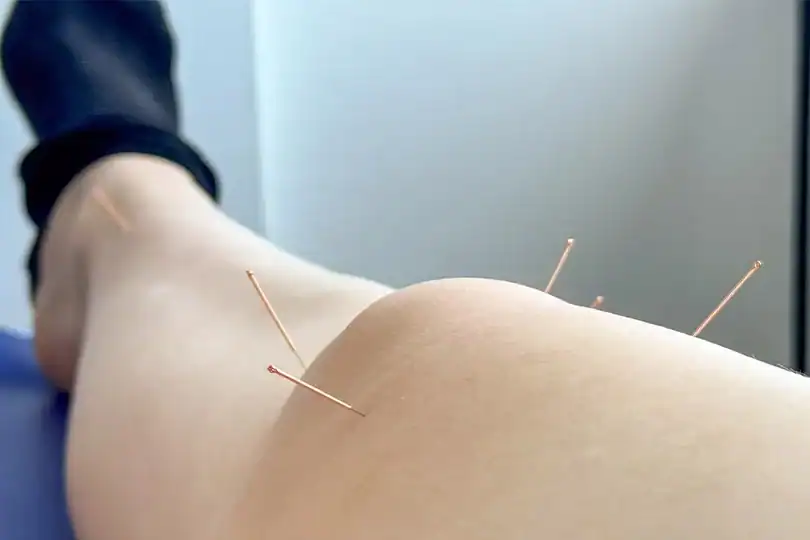
Acupuncture treatment is based on the individual presentation rather than on the season alone.
For someone whose pain becomes more noticeable in colder weather, treatment may focus on areas of muscular tension, restricted movement or sensitivity while also considering the wider Chinese medical pattern.
Depending on the individual, treatment may be used alongside conventional medical care, exercise, physiotherapy or other appropriate approaches.
People commonly seek acupuncture for problems such as back pain, neck and shoulder tension, joint pain and persistent muscular discomfort.
The aim is to help reduce pain and tension, improve comfortable movement and support the body’s ability to recover.
The Role of Tui Na and Bodywork
For some forms of winter stiffness or muscular pain, Tui Na, the hands-on massage and bodywork system used within Chinese medicine, can also be useful.
Treatment may include techniques intended to:
- relax protective muscular tension
- encourage comfortable movement
- work directly with tight or tender areas
- support mobility around joints
- complement acupuncture treatment
Whether acupuncture, Tui Na or a combination is appropriate depends on the nature of the problem and what is found during examination.
Seasonal Care Rather Than Waiting for a Flare-Up
Pain that becomes worse every winter does not necessarily have to be ignored until the weather changes again.
If you recognise a recurring seasonal pattern, it can be useful to address stiffness and reduced movement before they become established.
Simple measures such as staying active, keeping comfortably warm and responding early to increasing tension may help.
For some people, acupuncture or Tui Na forms part of that wider approach.
Acupuncture for Pain in Lewes
If colder weather has brought back an old problem or increased your usual pain and stiffness, treatment begins by looking at what is actually happening rather than assuming that every winter pain pattern is the same.
At my Lewes clinic, I use acupuncture and, where appropriate, Tui Na as part of an individual Chinese medicine treatment approach.
You can arrange a free 20-minute consultation if you would like to discuss whether treatment may be appropriate for you.